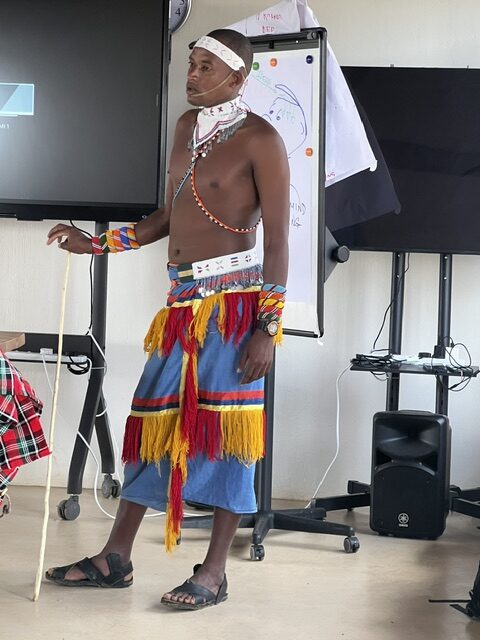
At the end of July, twenty-five Moran herders in Laikipia County, Kenya, completed the first module of Rangelands LAMP, a new version of the Leadership and Management Program built for the people who actually run the grazing lands. Allan Ward, who leads the course, wrote to MSWC the next day: the impact “went way beyond what we expected.”
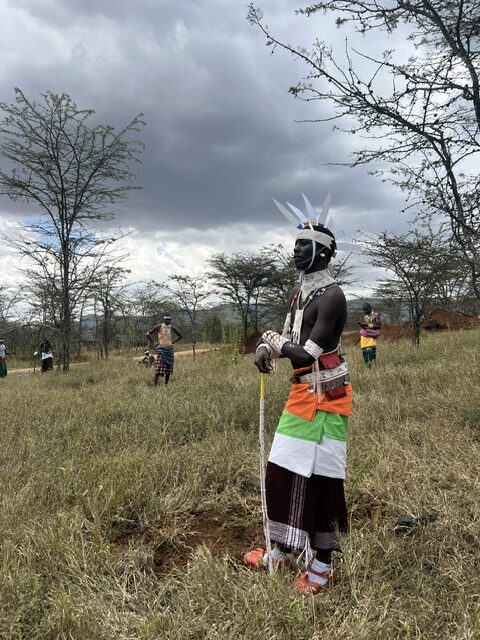
The Moran are the young men who move the cattle, and cattle decide what happens to a rangeland. As Allan put it, they are “the ones actually controlling what happens across the landscape: cattle rustling, how they deal with predators and other wildlife, bush meat poaching, grazing management, all of it.” Train them well and there is a real chance of changing behavior across Laikipia and into Samburu.
Three partners, one course
Rangelands LAMP is a pilot run by three organizations. Forward Consulting delivers the LAMP leadership and behavioral-change curriculum, which runs through all four modules. True Range, a regenerative grazing business with a demonstration farm in Laikipia, brings the science of the land: the water and carbon cycles, and the four principles of sustainable rangeland management (which animals, how many, where, and for how long). Natural State, a conservation science organization, hosts the training, monitors biodiversity and carbon on the ground, and will offer graduates a path into its own carbon training courses. The proposal was put to MSWC in March 2026.
The pilot will run four courses of twenty-five Moran each. Every course is nine days of instruction in four modules, with a day at True Range’s Kupona Farm demonstration site between modules, so that what is drawn on the flip chart is then seen in the grass. Participants practice planning grazing rotations on maps of their own landscapes. Those who finish receive a certificate endorsed by all three organizations. For many, it will be the first certificate they have ever held. Three of the four courses have now started, with 75 Moran in training, and the fourth begins at the end of September, bringing the total to 100.
The right people
Community politics can stall a project like this, so participant selection follows one rule: communities put forward the Moran leaders their peers actually listen to, not the holders of formal conservancy positions. Elders guide the choice. Natural State’s Community Advisory Committee acts as ambassador for the program and as a standing feedback channel on how it is being received. And the course teaches rather than directs: grazing decisions stay with the herders and their elders.
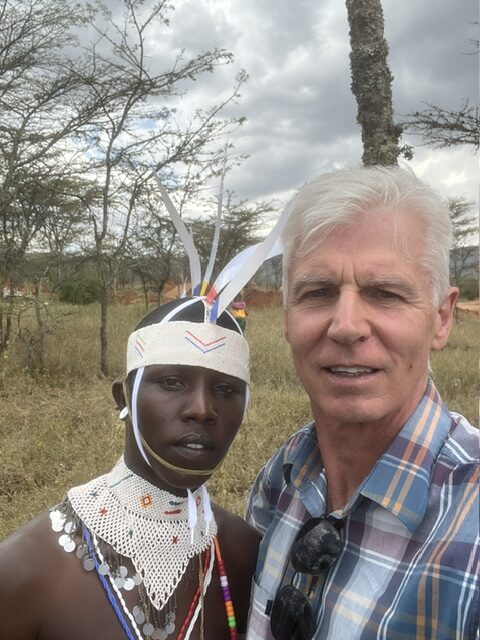
The first cohort was a real mix. Some were well educated; some had never been to school or held a pen. One has a degree in education and chose to go back to herding livestock. One is the elected leader of all the Moran in his conservancy, several hundred men, and as Allan noted, one word from him can shift the whole group’s behavior.
Why it matters for wildlife
Planned grazing grows more grass. True Range has already measured a 50 percent increase in rainfall infiltration after a single round of planned regenerative grazing at its Laikipia site, and more grass means less competition between livestock and wildlife and, in turn, less conflict. Restored grassland also stores carbon, which Natural State measures to international standards. Herders trained to manage the range this way become the stewards of a landscape where cattle and wildlife can both live.
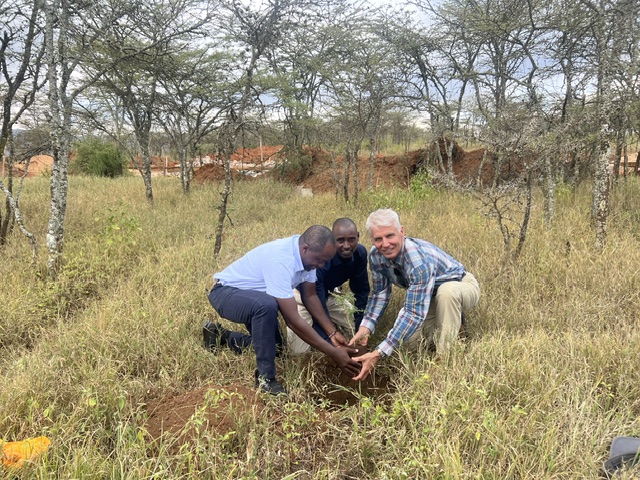
Natural State had its communications team at the first module, recorded interviews with several of the Moran, and had every participant plant an acacia seedling. Allan’s verdict on module one: “Really great start.” We will post more from the course as it comes in.
The course is facilitated by Allan Ward, Heiz Wadegu and Lavias Lekuuk of Forward Consulting, and by Richard Van Aardt and Bonface Sitienei, Head of Ecology, of True Range.
Photos: Allan Ward, Forward Consulting.